
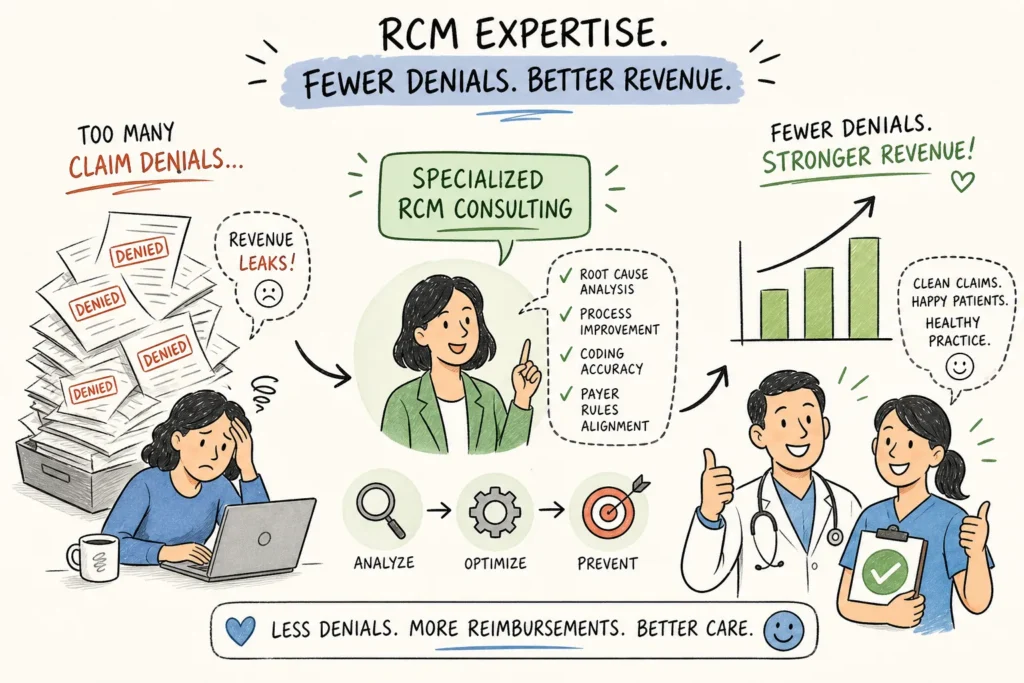
The average practice loses somewhere between 6 and 13 percent of submitted claims to denials. Most billing vendors will acknowledge that number, nod sympathetically, and then hand you a denial management report at the end of the month. That report tells you what already went wrong. It does not tell you what they are doing to stop it from happening again.
That is the real gap. Not billing volume. Not software. The difference between a billing service and a genuine revenue cycle consulting partner almost never shows up on a sales call. It shows up six months into the contract, when your denial rate has not moved, your accounts receivable is still aging, and the vendor’s answer is to work harder on appeals. At WeBill Health, we built our entire service model around prevention first, specifically because we kept seeing small and mid-sized practices handed the same reactive process dressed up in different software.
This article gives you a practical framework to evaluate consulting services specializing in healthcare revenue cycle management and denial prevention: what the core services should include, which benchmarks to hold them accountable to, how they should price the engagement, and a straightforward checklist to separate vendors with a real process from those with a polished pitch deck.
Why most billing services don’t actually prevent denials
Walk into any billing vendor’s website and you will find “denial management” listed as a feature. Read closely, and you will notice they are describing what happens after a claim is denied. That is not the same thing as preventing the denial in the first place, and the distinction matters more than most practice owners realize.
The difference between denial management and denial prevention
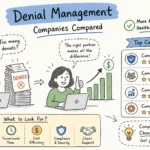
Denial management is reactive work. A claim goes out, gets denied, comes back, and someone on the billing team works it, rewrites it, resubmits it, and waits again. That cycle costs time, delays cash flow, and often results in partial recovery at best. Denial prevention cuts that cycle off at the root by catching errors, documentation gaps, and authorization issues before the claim ever leaves your practice.
According to MGMA and HFMA benchmarking data, the majority of claim denials trace back to preventable root causes, registration and eligibility errors, prior authorization failures, and coding or documentation problems. Yet many RCM vendors profit from the follow-up work that denial management generates. Vendors paid primarily on collections volume may have weaker incentives to invest in front-end prevention unless their contracts include performance-based components. A genuine RCM consulting partner specializing in denial prevention is paid to shrink that problem, not maintain it.
Why payer behavior has made this worse
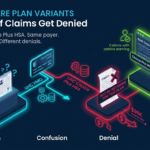
Commercial insurers increasingly rely on algorithmic utilization management to deny claims at scale. These systems do not review claims one by one on clinical merit. They match submitted data against preset payer rules, and anything outside those rules is automatically flagged. For physical therapy, behavioral health, and ABA therapy practices, this creates systematic denial patterns often driven by payer rule-matching and documentation or authorization gaps rather than the clinical quality of care delivered.
A billing vendor that only knows how to process claims cannot prevent denials generated by a payer’s cost-containment algorithm. You need a partner who understands payer-side logic well enough to design submission workflows that do not trigger those automated rejections to begin with.
What genuine specialty expertise looks like in denial prevention
Expertise is not a credential on a sales sheet. It shows up in the specificity of a vendor’s knowledge about your payer mix and your specialty’s documentation requirements. Generic billing services apply general coding rules. A specialty-aligned RCM consulting partner focused on denial prevention builds workflows around the exact triggers that cause your claims to fail.
Knowing the payer’s algorithm, not just the claim form
Effective denial prevention in high-risk specialties requires knowing which modifiers payers flag, which utilization thresholds trigger algorithmic review, and which prior authorization patterns raise the risk of automatic denial. For physical therapy, that means understanding how insurers score functional limitation documentation and progress notes. For behavioral health, it means knowing how payers apply level-of-care criteria and session-count limits before the claim is even submitted.
This kind of payer intelligence cannot be acquired from a billing software manual. It comes from working in specific specialties long enough to recognize patterns across thousands of claims. That experience is what separates a healthcare revenue cycle management consulting firm focused on denial prevention from a general billing service.
Specialty-specific coding and documentation depth
The CPT codes used in physical therapy, ABA therapy, and behavioral health billing are scrutinized more heavily than most outpatient specialties. Payers look for documentation consistency, appropriate modifier use, and progress notes that justify continued treatment. A billing team that handles fifty different specialties may struggle to develop the deep specialty knowledge that protects you in a payer audit or a post-payment recoupment review. For context, see average claim denial rates by specialty to understand how scrutiny and denial risk vary across practice types.
WeBill Health focuses specifically on the specialties where this depth matters most. That specialization is not a marketing choice; it directly determines whether a first-submission denial is preventable or whether your practice absorbs the cost of repeated appeals.
Why one-size-fits-all RCM fails small practices
Small and mid-sized practices do not have the claim volume to absorb systematic denials the way a large hospital system can. A 10 percent denial rate at a hospital is a budget line. At a four-provider outpatient clinic, it is a cash flow problem. Small practices need a revenue cycle partner that functions as an advocate, one built to push back against payer-side tactics rather than simply process volume. If you want practical steps for smaller practices, see our guide on How to Reduce Medical Claim Denials in Small Practices.
Core services that consulting services specializing in healthcare revenue cycle management and denial prevention should deliver
When you evaluate any RCM vendor, look past the marketing language and ask what they actually do before a claim is submitted. The strongest denial-prevention work is front-end work, and the ratio of front-end to back-end effort tells you a lot about how a partner operates.
Front-end controls that stop denials before they start
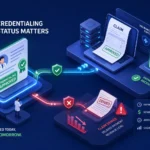
The highest-value services in a denial-prevention-focused engagement are real-time eligibility verification, prior authorization management built into the scheduling workflow, and claim scrubbing against payer-specific edit rules. Ask any prospective vendor directly: what percentage of your denial-prevention work is front-end versus reactive? If they struggle to answer that, you have your answer. In addition, predictive denial tools can identify high-risk claims before submission and substantially reduce downstream rework when implemented well.
Denial analytics and structured appeal workflows
When denials do occur, a serious partner does not just rework and resubmit. They track root causes at the payer and code level, identify recurring patterns, and escalate high-dollar denials through a structured appeals process with documented overturn rates. A denial dashboard is not optional for this kind of work. A monthly summary report is not the same thing, and you should push back if that is all a vendor offers. For a practical framework that expands on these tactics, see our Denial Defense 2.0.
AR recovery and accounts receivable clean-up
Most practices that engage an RCM consulting firm for the first time carry an existing AR backlog. A partner worth hiring will assess that backlog on day one, prioritize recovery by dollar value and appeal probability, and set realistic timelines. Well-run engagements typically produce 5 to 10 percent collection improvement and 20 to 30 percent fewer AR days within the first two quarters. Those results require a structured approach, not just additional billing headcount.
The benchmarks that prove a partner is working
These are the specific numbers you need to hold any RCM consulting firm accountable to. Get them in writing before you sign anything. If a vendor resists defining KPIs in a contract, that tells you everything you need to know about their confidence in their own results.
Denial rate, clean claim rate, and first-pass resolution
A high-performing outpatient practice should target a denial rate below 5 percent, ideally closer to 3 to 4 percent. Clean claim rate, the percentage of claims accepted on first submission, should sit above 95 percent, a threshold referenced consistently in HFMA benchmarking guidance for high-performing practices. First-pass resolution rate measures how many claims are fully paid without rework. Any partner you shortlist should be able to show you their current client averages against these benchmarks, not hypothetical targets pulled from an RFP response.
AR days, net collection rate, and ROI timeline
Days in accounts receivable should be under 40 for most outpatient practices. Best-in-class is under 28. Net collection rate, actual payments versus expected, is the single most important cash flow indicator you can track.
On ROI: well-run engagements with consulting services specializing in healthcare revenue cycle management and denial prevention typically reach positive payback in 3 to 6 months, with documented 12-month returns commonly in the 200 to 700 percent range depending on starting denial rate and practice size. Insist on a baseline assessment before signing anything so you have a documented starting point to measure against.
Pricing models and what fair looks like
RCM consulting firms use three primary fee structures, and none of them is inherently better than the others. The right model depends on your practice’s size, starting denial rate, and how much operational support you need beyond the consulting work itself.
The three models and when each makes sense
Percentage of collections aligns the partner’s incentive with your revenue and is most common in ongoing billing engagements and denial recovery work. Fixed-fee or project-based pricing suits defined scopes: audits, workflow redesigns, or implementation projects with clear deliverables. Hybrid models combine a base retainer with a performance component and work well for small practices that want predictable costs alongside measurable outcomes. Whatever model you agree to, the fee structure should be fully transparent before the engagement starts.
Contract terms that protect you
Before signing, confirm that the contract defines scope, deliverables, reporting cadence, and what happens after go-live. Watch for vague “denial management” language with no defined KPIs. A partner confident in their results will agree to measurable SLAs written into the agreement, including clean claim rate targets, denial rate reduction timelines, and AR days benchmarks. Also confirm who owns your data and how you access it if you exit the contract. Those two questions alone filter out a meaningful portion of vendors who are not worth your time.
How to shortlist an RCM consulting partner without getting burned
The vendor selection process does not need to be complicated. It needs to be specific. Generic questions get generic answers. The questions below are designed to surface real process versus polished presentation. For more structured vendor-selection guidance, see this list of top questions to consider during RCM vendor selection.
The questions that reveal what a vendor actually does
Ask directly: What percentage of your denial-prevention work is front-end versus reactive? Can you show me client denial rates before and after engagement? Do you have documented experience with my specialty and my payer mix? What does your reporting look like, and how often do we review performance together? These questions do not have good generic answers. A vendor with a real process will answer them in specific terms. A vendor with a pitch deck will pivot to features.
Green flags, red flags, and the shortlisting decision
Green flags include specialty-specific case studies, defined benchmarks in the contract, a baseline assessment offered before pricing is finalized, and transparency about appeal overturn rates. Red flags include no specialty focus, vague SLA language, reluctance to discuss payer-specific denial patterns, and pricing tied entirely to volume rather than outcomes. Shortlist two or three vendors, then request a denial audit of your last 90 days of claims. Compare what each firm finds and what they propose to do about it. That single exercise will show you more than any sales presentation.
The gap you need to close
Most practices do not have a billing problem. They have a denial-prevention gap, and that gap compounds every month that passes without a partner who is actively working to close it. The benchmarks are real, the ROI is documented, and the only thing standing between your practice and recovered revenue is choosing consulting services specializing in healthcare revenue cycle management and denial prevention, a partner that treats prevention as the core job, not an afterthought.
If what this article describes sounds like the kind of partner you have been looking for, WeBill Health is worth a conversation. We work specifically with small and mid-sized outpatient specialty practices, physical therapy, behavioral health, ABA therapy, and related fields, and we start every new engagement with a denial audit so you know exactly where your revenue is leaking before we agree on scope or price. You can also review our Best RCM Services in the U.S.: A 2026 Buyer’s Guide for additional context on selecting vendors.
Request a free denial audit and see what your last 90 days of claims actually reveal. No commitment required, and the findings alone are worth the conversation.