

Medical billing services for primary care often bleed cash through the least visible channels: denials that never get worked, AR sitting past 60 days, E/M codes defaulting to lower levels because no one audited the pattern. Most primary care practices don’t lose revenue because patient volume is low. They lose it because the billing setup is quietly draining money that’s already been earned. The problem usually isn’t obvious until someone actually runs the numbers.
At WeBill Health, we’ve worked with practices that assumed everything was fine, until they pulled their collection rate and found it sitting at 91%. That’s not a billing problem in isolation. That’s a cash flow problem with a billing cause. (The 91% figure comes from an anonymized client engagement; individual results vary by payer mix and practice size.) This guide gives you the framework to evaluate any billing partner before you hand them access to your revenue cycle, covering the KPIs to demand, the integrations to require, the pricing to expect, and the questions that separate capable vendors from ones who will cost you more than they save.
The KPIs every billing vendor should be able to beat
Before you evaluate a single vendor, you need to know what good looks like. Without benchmarks, every billing company sounds competent on the sales call. For a concise list of measurable benchmarks to demand, see this overview of revenue cycle management KPIs.
Collection rate: the baseline that can’t slip
A net collection rate below 95% is a red flag. Top-performing billing partners for primary care consistently hit 96% to 98%. Net collection rate measures collected revenue against adjusted expected revenue, a much more honest number than gross collection rate. Some vendors quote gross collection rate to make their performance look stronger. Ask specifically for the net number. If they can’t explain the difference, keep looking.
Days in AR: how fast money moves
Days in accounts receivable below 40 is the acceptable threshold for primary care. Genuinely strong partners push this to 30 to 35 days. This metric connects directly to cash flow: slower AR means delayed payroll, deferred equipment purchases, and a practice that’s constantly operating from a position of financial lag rather than stability.
Claim denial rate: the number that reveals process quality
A denial rate above 5% signals upstream problems in coding, eligibility verification, or documentation. Best-in-class billing companies in primary care hold denial rates under 2%. This metric tells you more about a vendor than almost any other number, because it reflects whether they’re preventing problems before submission or just reacting after the damage is done.
Denial management and AR recovery: where primary care practices quietly lose money
Denials in primary care aren’t random. They follow consistent patterns, and a billing partner who understands those patterns is worth significantly more than a generalist shop that treats every denial as a surprise.
The most common denial triggers in primary care
Primary denial categories break down into coding mismatches, documentation gaps, and eligibility problems. Coding denials happen when ICD-10 and CPT codes don’t align, when modifiers are missing or incorrect, or when outdated codes are still in use. Documentation denials occur when the chart doesn’t clearly support medical necessity or when notes don’t match the billed service level. Eligibility denials come from inactive coverage, incorrect payer order, coordination-of-benefits conflicts, and missing prior authorizations. Each category has a different fix, which is why lumping them all into “denials” and reacting is never enough. For a detailed list of common denial causes and how they occur in practice, review this piece on the top reasons claims get denied.
What proactive denial prevention actually looks like
Reactive billing means you submit a claim, it gets denied, and then someone works the denial. Proactive billing means eligibility is verified before the service, codes are scrubbed before submission, and real-time claim edits catch errors before they reach the payer. The best billing partners build denial prevention into the front end of the revenue cycle. WeBill Health operates this way by design: catching the problem at the source rather than spending hours on appeals that could have been avoided entirely.
How to evaluate a vendor’s denial management process
Start with these questions: What is your current first-pass claim acceptance rate? How do you handle coding edits before submission? What is your average time from denial identification to resubmission? For context, strong performers typically show first-pass acceptance rates above 95%, though benchmarks vary by payer and specialty. Vendors who answer with specific numbers and documented processes are worth talking to further. Vague answers about “our team works every denial” tell you nothing useful.
EHR-compatible billing services: what actually needs to connect for clean claims
Poor integration between a billing company and your EHR is one of the most underestimated causes of revenue loss in primary care. “We integrate with your system” is not a sufficient answer, it usually masks a manual workaround or a surface-level data handoff that introduces errors right where accuracy matters most.
Compatible systems and what integration really means
The most common EHR and practice management platforms in primary care include athenahealth, NextGen, AdvancedMD, eClinicalWorks, and Epic. For each, direct API, HL7, or FHIR connectivity is the standard to require. Surface-level integrations often rely on manual data transfer between systems, which introduces errors and delays at exactly the points in the workflow where accuracy matters most. For an overview of leading EHR / EMR system integrations with billing platforms, see this review of EHR and EMR integration with medical billing.
Integration layers that determine claim accuracy
Data flows that must be seamless include patient demographics and insurance data, real-time eligibility verification, charge capture and code transfer, clearinghouse routing, denial feedback and claim status updates, and ERA payment auto-posting. Each disconnected layer is a point where a claim can fail, get delayed, or post incorrectly. A billing vendor with a native or deeply integrated connection to your EHR eliminates most of these failure points before they become billing problems.
Red flags to watch for in a vendor’s integration pitch
Watch for these red flags in any integration pitch: vendors who require your staff to manually enter claim data into their system, vendors who use a proprietary PM system that doesn’t sync with your EHR, and vendors who can’t demonstrate a live integration with your specific platform before you sign. If they can’t show it in a demo, they don’t have it.
E/M coding accuracy and where primary care revenue leaks quietly
Evaluation and management codes are the foundation of primary care revenue. Research from coding compliance organizations suggests that undercoding alone can reduce E/M reimbursement by 10% to 15% across a practice’s visit volume, making this one of the most consistently preventable sources of revenue loss.
Why the 2021 CMS documentation changes still matter
The 2021 CMS overhaul to office visit E/M coding shifted selection from counting history and exam elements to medical decision-making complexity or total time. That change simplified documentation requirements significantly, but some vendors never fully updated their coding workflows. The result is either undercoding, which leaves money on the table, or overcoding, which creates audit risk. Both outcomes hurt the practice. For a practice-focused look at how primary care billing will continue to evolve, including coding and documentation considerations, see our piece on Primary Care Billing in 2025.
Common E/M coding errors that shrink collections
Damaging patterns in primary care include defaulting to lower-level E/M codes out of caution, failing to capture add-on codes for chronic care management or complex medical decision-making, and misaligning documentation with the code level billed. Each of these reduces reimbursement on visits the physician has already delivered. A billing partner with genuine primary care coding expertise catches these gaps on the front end rather than leaving revenue uncollected across thousands of visits.
How to vet a billing partner’s coding expertise
Ask directly: Do you have certified coders with specific experience in outpatient primary care E/M coding? How do you handle coding audits for E/M compliance? Can you show a sample coding accuracy report from a comparable practice? A billing partner who answers these questions with documentation and specifics is one worth trusting with your E/M revenue.
How billing service pricing actually works for primary care
Pricing is where many practices make poor decisions because they focus on the rate without understanding what’s included or excluded.
Percentage of collections vs. flat fee per claim
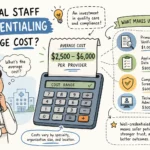
The two dominant pricing models for primary care billing are percentage of collections and flat fee per claim. Percentage of collections is the most common, typically ranging from 4% to 10%, with most established billing companies for primary care landing between 5% and 8%. Flat fee per claim runs roughly $4 to $10 per claim depending on volume and complexity. Percentage pricing aligns the vendor’s incentives with your collections. Flat fee per claim is more predictable but doesn’t inherently motivate the vendor to pursue every dollar aggressively. For concrete examples and pricing breakdowns for small practices, review our Medical Billing Services for Small Practices guide.
What practice size does to your pricing
Solo providers and practices with lower monthly collections often pay toward the higher end of the percentage range, around 7% to 10%. Small groups of two to five physicians typically land between 6% and 8%. As volume grows, leverage increases and rates can be negotiated down. Monthly collections of $100,000 at 7% means $7,000 per month in billing fees. At $250,000 monthly, that same 7% rate is $17,500. Know your numbers before any vendor negotiation.
Hidden costs and contract terms that hurt practices
Costs that often get left out of the headline quote include setup fees, credentialing fees when not bundled into the base rate, fees for working aging AR from a previous billing company, and termination clauses that lock you in for 12 months or longer. Require a complete fee schedule in writing before signing anything. Any vendor who won’t provide one is telling you something important about how they operate.
Questions to ask any billing company before you commit
The vendor conversation is where you confirm whether the benchmarks and capabilities discussed above are real or just marketing. These questions get to the point.
Credentialing capabilities and timelines to verify
Commercial payer credentialing takes 90 to 150 days on average. Medicare typically runs 45 to 90 days. If a billing vendor manages credentialing, ask for their average turnaround times and their first-pass approval rate. Based on industry experience and CAQH reporting standards, a well-prepared application should achieve 80% to 90% first-pass success. Credentialing gaps directly delay reimbursement from new payers, which is particularly damaging during provider onboarding or payer contract changes. For practical timelines and what to expect during the credentialing process, read more about how long provider credentialing takes.
References and specialty experience that actually apply
Ask for references from practices that match your profile: primary care, similar size, similar EHR. References from large hospital systems or unrelated specialties don’t tell you how the vendor performs for outpatient family medicine or internal medicine. A vendor with real primary care RCM experience should be able to connect you with two or three comparable client references without hesitation.
The short checklist to use in every vendor interview
These are the questions that matter most:
- What is your current average net collection rate across primary care clients?
- What is your first-pass claim acceptance rate?
- How do you handle E/M coding audits for outpatient primary care?
- What EHR integrations do you currently support with live API or HL7 connectivity?
- What is your denial rate and average time from denial identification to resubmission?
- Are credentialing services included in your pricing, and what are your average turnaround times?
- What are your contract terms, and what are the exit conditions?
The answers to these questions, not the sales pitch, tell you whether a billing partner is the right fit for your practice.
The bottom line
Choosing medical billing services for primary care is not about finding the cheapest option or the most impressive-sounding feature list. It’s about finding a partner who understands how primary care revenue actually works, holds themselves to measurable KPIs, integrates cleanly with your EHR, and protects your E/M revenue while keeping denial rates low.
Practices that work with a billing partner who specializes in primary care RCM, rather than a one-size-fits-all generalist shop, stabilize cash flow faster. They skip the painful ramp-up period that comes with vendors who need months to figure out your payer mix and coding patterns before they start performing.
If your practice is evaluating billing partners right now, start with the benchmarks in this guide. Hold every vendor to them. And if you want to see how WeBill Health performs against these numbers for primary care practices specifically, reach out and we’ll show you the actual data. For an actionable checklist on selecting vendors, see our guide on how to choose the right revenue cycle management company.