Short answer: CPT 90791 is the psychiatric diagnostic evaluation, the intake visit. CPT 90837 is individual psychotherapy of 53 minutes or more. They are not interchangeable and, under Medicare’s correct coding edits, they are not billed together on the same day for the same patient. The 90791 vs 90837 rule is simple: bill 90791 for the first assessment, then 90837 for later sessions that meet the time threshold.
Updated November 2026 with 2026 Medicare rates and the 2027 telehealth rules. Every rule below links to its source.
What is the difference between 90791 and 90837?
The 90791 vs 90837 difference is the service. CPT 90791 is a psychiatric diagnostic evaluation without medical services: history, mental status, assessment and a treatment plan. CPT 90837 is psychotherapy, a treatment session, and it is billed by time. A non prescribing therapist or psychologist uses 90791 for the intake; a prescriber who adds medical services such as a medication review uses 90792 instead.
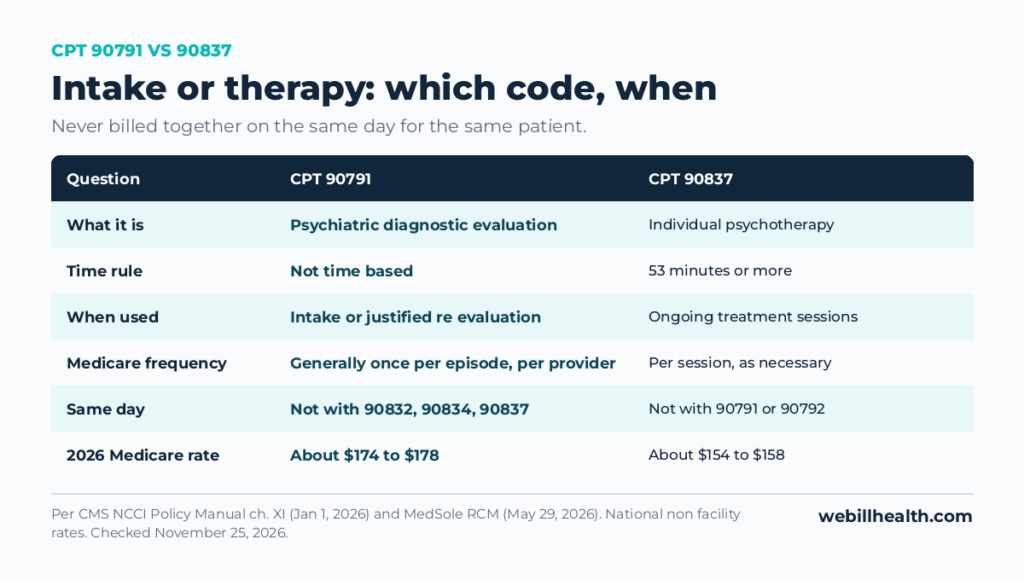
90791 vs 90837 compared side by side
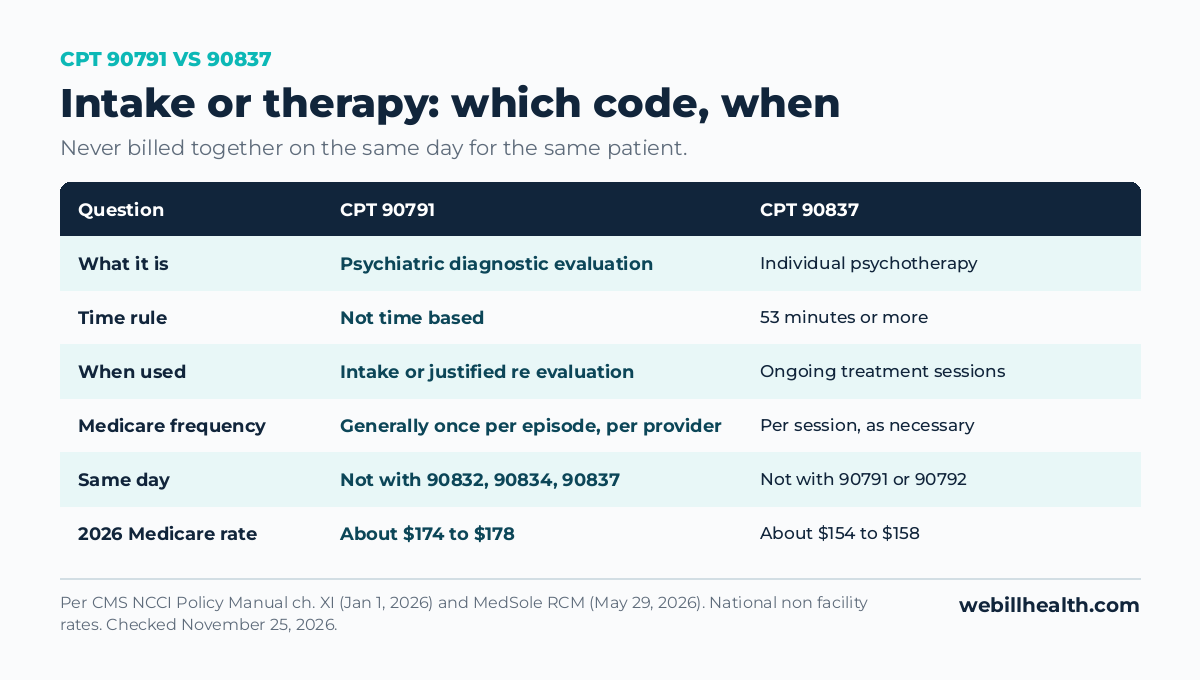
The 90791 vs 90837 split comes down to purpose, time, frequency and price. The table uses 2026 national Medicare rates for the office setting.
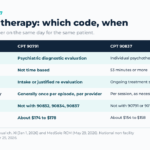
| Question | CPT 90791 | CPT 90837 |
|---|---|---|
| What it is | Psychiatric diagnostic evaluation, no medical services | Individual psychotherapy |
| Time rule | Not time based | 53 minutes or more of face to face time |
| When it is used | Intake, or a new evaluation when clinically needed | Ongoing treatment sessions |
| How often | Medicare: generally once per episode of care per provider | Per session, as medically necessary |
| Same day as the other | Not with 90832, 90834 or 90837 | Not with 90791 or 90792 |
| 2026 Medicare rate (non facility) | About $174 to $178 | About $154 to $158 |
Can you bill 90791 and 90837 on the same day?
You cannot bill 90791 and 90837 on the same day for the same patient. CMS’s NCCI Policy Manual, revised January 1, 2026, says 90791 and 90792 are not separately reportable with psychotherapy codes on the same date of service, because psychotherapy already includes continuing psychiatric evaluation. Neolytix’s 2026 psychotherapy guide turns that into a habit: on the first visit, bill 90791 only, and begin psychotherapy codes at later sessions. The same logic applies to E/M visits. Under the NCCI edits, E/M codes cannot be reported with 90791 or 90792 on the same date by the same provider, as AAPC’s Revenue Cycle Insider explains.
How long must a 90837 session be?
A 90837 session must last at least 53 minutes of face to face psychotherapy. Time sets the code: 90832 covers 16 to 37 minutes, 90834 covers 38 to 52, and 90837 starts at 53. So a 50 minute session is a 90834, not a 90837. MedSole’s May 2026 guide is clear that the code follows the documented face to face time, not the length of the scheduled appointment.
How often can you bill 90791?
Medicare generally allows one 90791 per episode of care, per provider, per patient, according to MedSole’s 2026 guide. Noridian, the Medicare contractor for Jurisdiction F, notes that the code is reported once per day and may be reported more than once a year when a separate evaluation is done. A repeat evaluation can be justified after a long break in care, an inpatient psychiatric stay, a significant change in mental status or a second opinion. Many commercial plans cap it at once a year per provider.
What does 90791 vs 90837 pay in 2026?
In 2026, Medicare pays about $174 to $178 for 90791 and about $154 to $158 for 90837 in the office setting nationally, per MedSole’s May 2026 rate guide. For comparison, 90834 pays about $131. Licensed marriage and family therapists and mental health counselors bill 90791 at 75% of the physician rate, which works out to about $130 to $133. Local rates vary with the Medicare locality.
What does undercoding 90837 cost a practice?
Undercoding 90837 costs a practice the gap between 90834 and 90837 on every long session. Worked example, using the 2026 national rates above: a therapist who sees 20 patients a week for 55 minutes but bills 90834 out of habit leaves about $23 per session on the table ($154 minus $131). Over 50 working weeks that is about $23,000 a year for one clinician. The opposite habit costs money too: billing 90837 for a 50 minute session invites a takeback on audit, because the note does not support the code.
Which code do you use when psychotherapy and an E/M visit happen together?
When a prescriber provides an E/M visit and psychotherapy in the same session, the psychotherapy is billed with an add on code, 90833, 90836 or 90838, not with 90837. The E/M level is chosen by medical decision making, and the psychotherapy minutes are counted separately. Interactive complexity, 90785, can be added to 90791, 90792 and the psychotherapy codes when a third party or a communication barrier complicates the session.
How do you bill 90791 and 90837 by telehealth in 2026 and 2027?
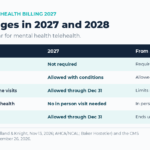
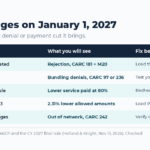
For telehealth in 2026, modifier 95 marks a synchronous video visit and modifier 93 marks an audio only visit, with POS 10 when the patient is at home and POS 02 elsewhere. POS 10 pays the non facility rate and POS 02 pays the lower facility rate. Medicare’s in person visit requirement for mental health telehealth has been delayed and now applies after December 31, 2027, under the CY 2027 final rule. Meanwhile, the 2027 conversion factor falls to $32.63 for clinicians who do not qualify for the APM rate, a 2.31% cut, so both codes will pay slightly less next year.
The WeBill Health take
The 90791 and 90837 errors that cost the most are quiet ones. A same day intake and therapy line denies, a 55 minute session gets billed as 90834, or a repeat 90791 goes out without the note that justifies it. None of these raise an alarm on their own; they just pay less or not at all.
WeBill Health reviews behavioral health claims against internal payer rule libraries organized by specialty and carrier, and every claim passes Human Expert Review before it goes out, so time thresholds and same day edits are checked before submission. The result is a 98% clean claim rate. The open question for 2027: once Medicare’s in person requirement returns in 2028, how many commercial plans will copy it for audio only therapy?
Want to know whether your intake and therapy codes are leaving money behind? Request your Revenue Defense Audit and we will check time thresholds, same day edits and 90791 frequency on your claims. Related reading: mental health billing codes for 2026 and 2027, the behavioral health billing playbook and telehealth billing rules for mental health providers.
Frequently asked questions
Can 90791 and 90837 be billed on the same day?
No. Bill 90791 for the intake visit and start psychotherapy codes such as 90837 at later sessions. 90791 and 90792 are not separately reportable with psychotherapy codes on the same date of service.
How many minutes is 90837?
At least 53 minutes of face to face psychotherapy. Sessions of 38 to 52 minutes are billed as 90834, and 16 to 37 minutes as 90832.
How much does Medicare pay for 90791 and 90837 in 2026?
About $174 to $178 for 90791 and about $154 to $158 for 90837, national non facility rates. Local rates vary by Medicare locality.
How often can 90791 be billed?
Medicare generally allows one 90791 per episode of care per provider. A repeat evaluation needs a clinical reason, such as a long break in care or a significant change in mental status.
Sources
- MedSole RCM (Andrew Christian), Mental health CPT codes 2026: complete billing guide, May 29, 2026
- Neolytix, Psychotherapy medical billing and coding guide, 2026
- AAPC Revenue Cycle Insider, Rules of thumb for coding E/M or psychiatric evaluation, checked November 25, 2026
- Noridian JF Part B, Mental health billing guidance, checked November 25, 2026
- CMS, NCCI Policy Manual for Medicare Services, Chapter XI, revised January 1, 2026
- Holland & Knight, CMS issues CY 2027 Medicare Physician Fee Schedule final rule, November 13, 2026
- AHA, CMS releases CY 2027 physician fee schedule final rule (2.31% non QP cut), November 2026