Physical therapy billing: codes, units, and denial fixes
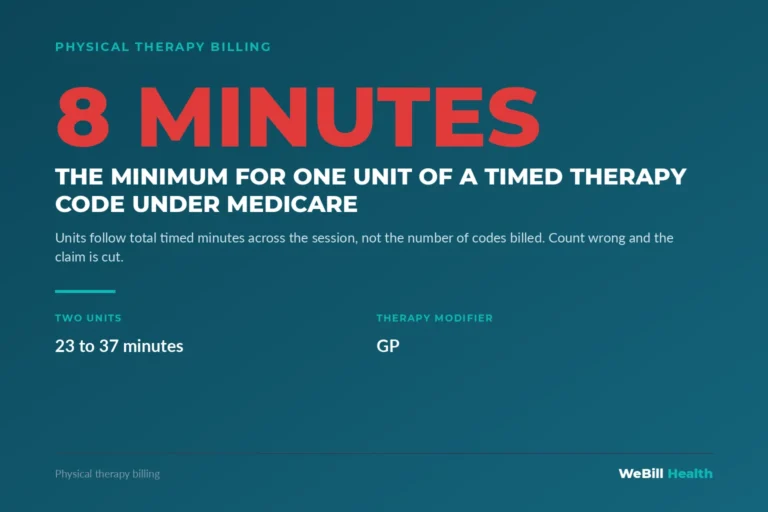
Master physical therapy billing with the right CPT codes, unit rules, and documentation. Learn how to cut denials and recover revenue faster for your PT practice.


Master physical therapy billing with the right CPT codes, unit rules, and documentation. Learn how to cut denials and recover revenue faster for your PT practice.
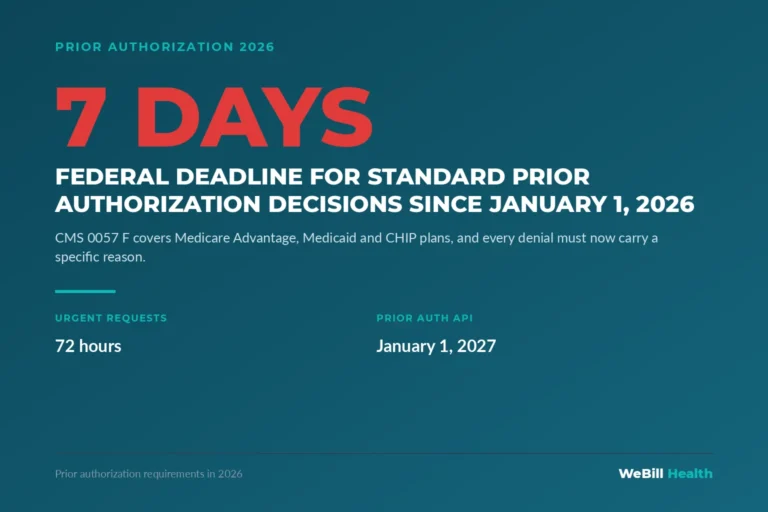
CMS-0057-F brings major prior auth requirements in 2026. Learn the new turnaround times, affected payers, FHIR timelines, and workflow steps to avoid denials.
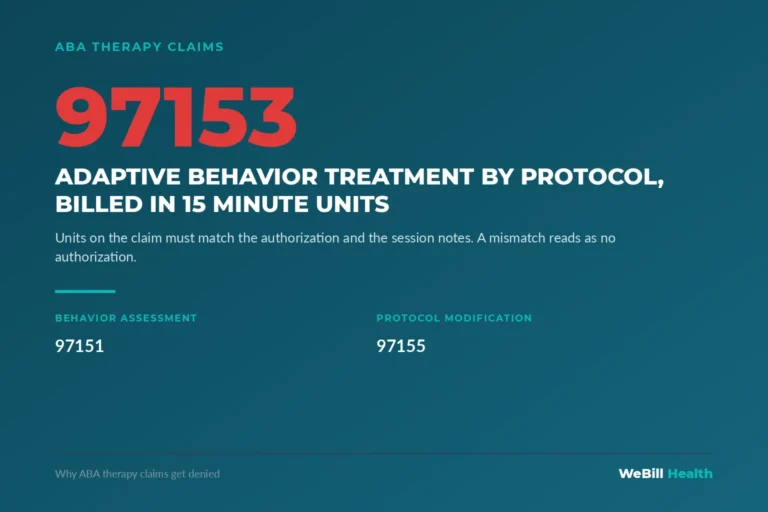
Why ABA claims deny and 5 fixes: 97153 credential modifiers, 97155 technician direction, 97151 unit caps, authorizations and progress notes, with 2027 CPT changes.
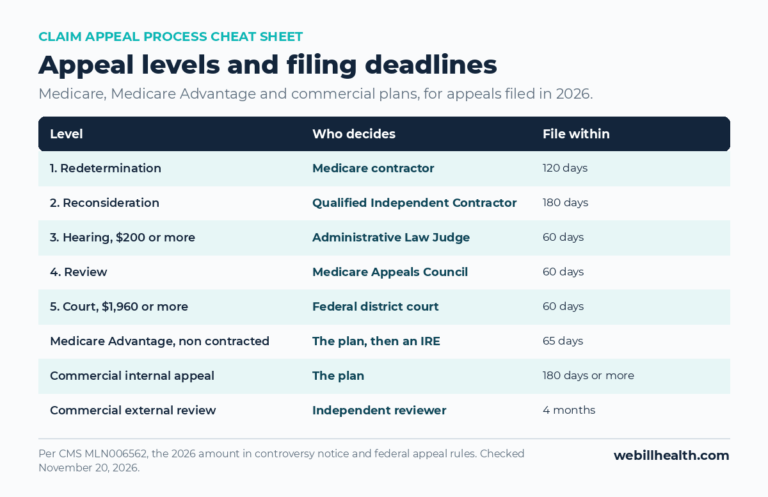
Master the claim appeal process with step-by-step guidance on timelines, documentation, peer reviews, and escalation. Recover denied revenue today.
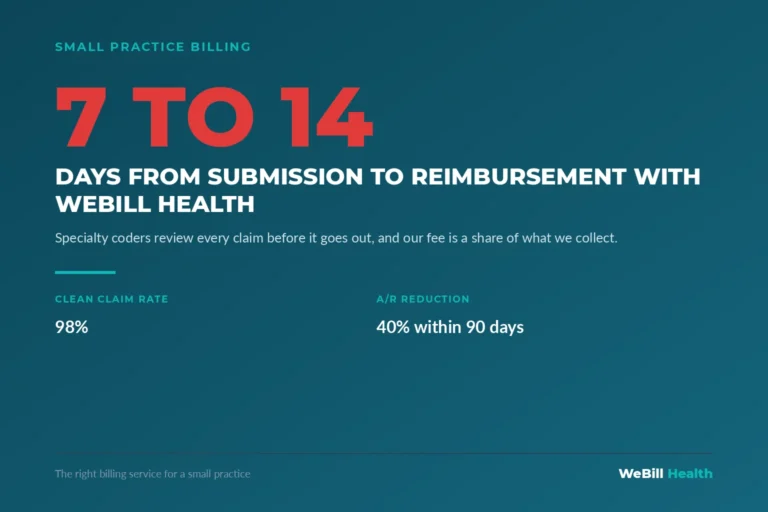
What a small practice should look for in a medical billing service in 2027: software or full service, pricing models, the questions to ask, and red flags.
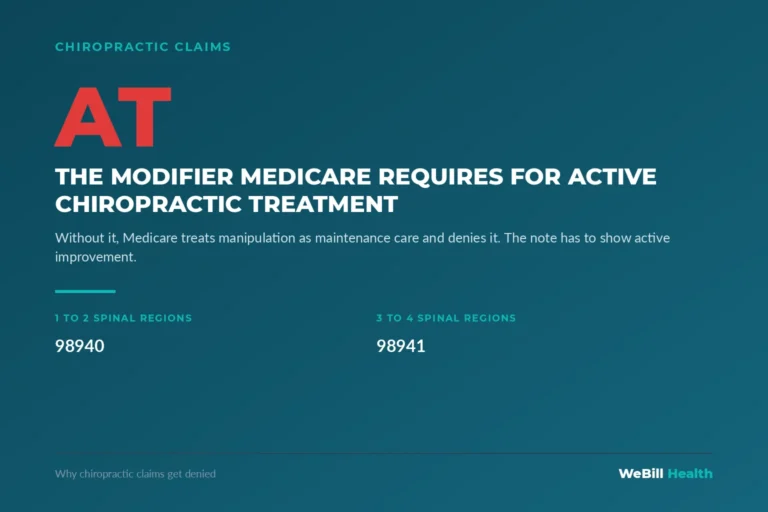
A denied claim is not a paperwork inconvenience. It is revenue that was earned at the point of care and then lost at the point of billing.
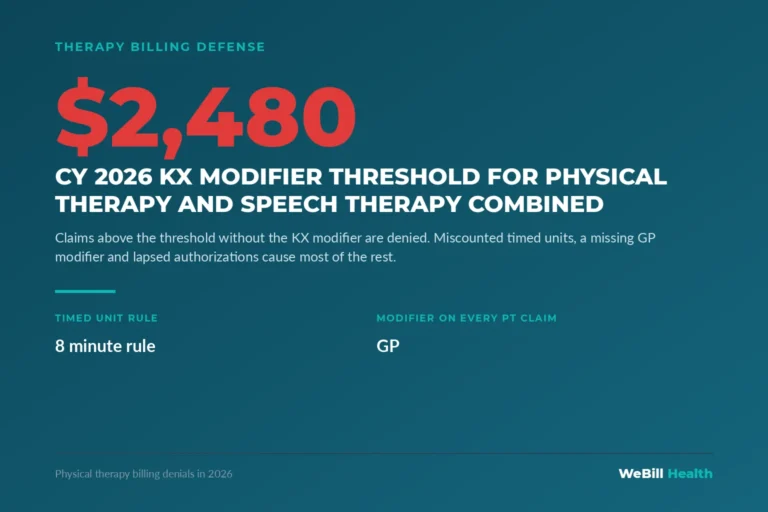
Physical therapy billing denials in 2026 are not generated by clinical failures. They are generated by a unit count that does not match the documented session minutes, a note that describes symptoms instead of functional deficits, a GP modifier omitted from a claim before it reaches a reviewer, and a Medicare Advantage authorization that expired three days before the last session of a treatment block. This article maps each denial vector, what it costs per month at full patient volume, and what audit-ready PT billing actually requires before a claim leaves your practice.
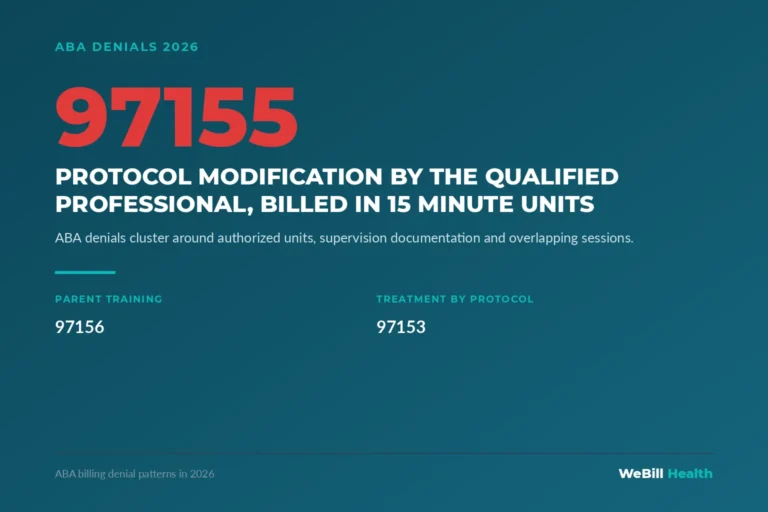
Payers are running post-payment utilization reviews on ABA claims in 2026 and issuing recoupment demands on sessions that were delivered correctly. This article breaks down the five denial patterns hitting ABA practices right now, from unit calculation errors and supervision ratio flags to NCCI bundling edits and authorization unit exhaustion, and shows what audit-ready ABA billing actually requires before a claim leaves your practice.
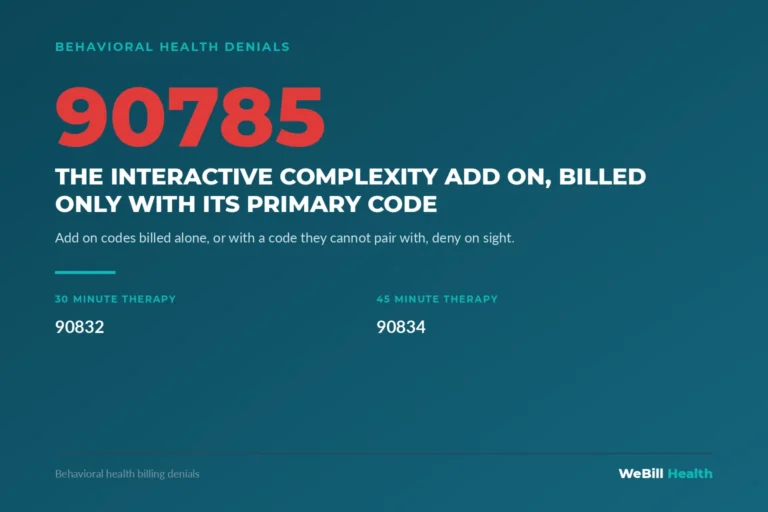
Behavioral health payers in 2026 are denying clean claims using utilization management algorithms, not clinical review. This article breaks down the difference between a medical necessity denial and a pattern flag, explains why telehealth POS mismatches are creating compounding denial chains, and shows how MHPAEA parity law belongs in your appeal strategy.
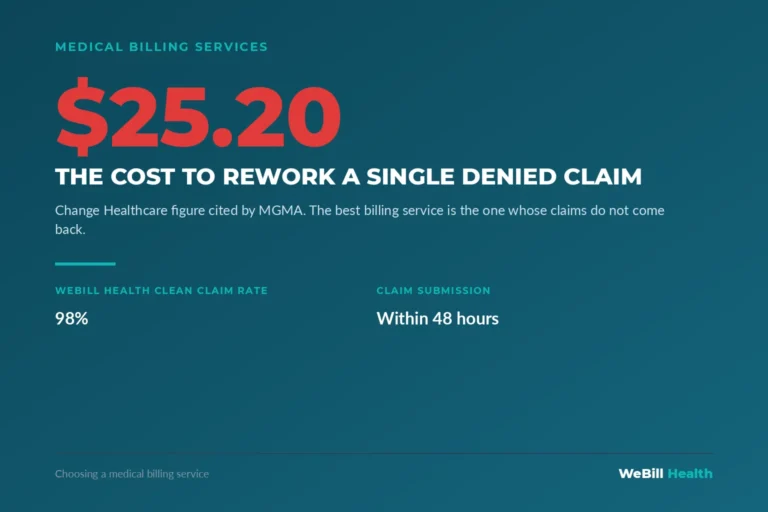
The best medical billing service for a small practice runs the whole revenue cycle, knows your specialty’s codes and payers, and puts its clean claim rate, submission time and fees in writing. This guide compares WeBill Health, CareCloud, AdvancedMD and…