
Insurance Prior Authorization: How to Get Approved Fast

Learn how insurance prior authorization works, what payers look for, and proven steps to cut delays and win denials. WeBill Health helps practices get approved faster.

Learn how insurance prior authorization works, what payers look for, and proven steps to cut delays and win denials. WeBill Health helps practices get approved faster.

Learn how to evaluate a revenue cycle management company using real KPIs, pricing benchmarks, and 9 vetting questions before signing any RCM contract.

Master the claim appeal process with step-by-step guidance on timelines, documentation, peer reviews, and escalation. Recover denied revenue today.

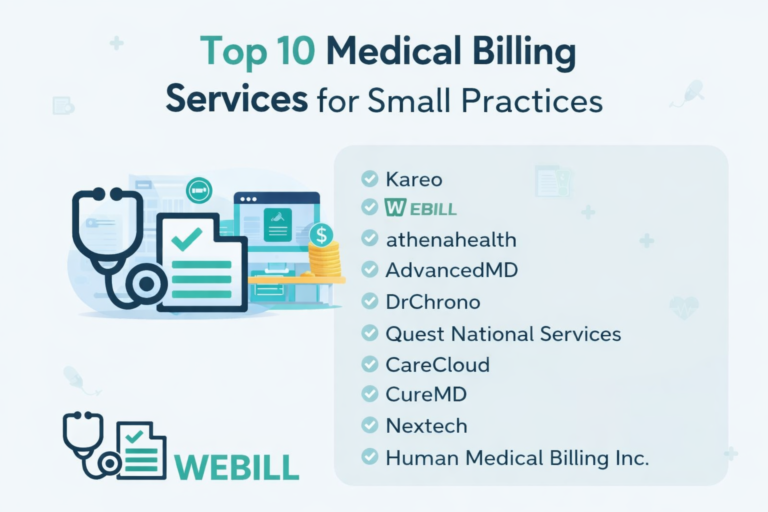
Find the best medical billing service for your small practice. Compare costs, vendor types, and use our practical checklist to pick the right fit.

Reduce claim denials with 9 actionable strategies — from eligibility checks to denial pattern tracking — and build a measurable plan to protect your practice revenue.

A denied claim is not a paperwork inconvenience. It is revenue that was earned at the point of care and then lost at the point of billing.

Physical therapy billing denials in 2026 are not generated by clinical failures. They are generated by a unit count that does not match the documented session minutes, a note that describes symptoms instead of functional deficits, a GP modifier omitted from a claim before it reaches a reviewer, and a Medicare Advantage authorization that expired three days before the last session of a treatment block. This article maps each denial vector, what it costs per month at full patient volume, and what audit-ready PT billing actually requires before a claim leaves your practice.

Telehealth billing denials in mental health practices in 2026 are not generated by clinical failures. They are generated by a POS code applied to the wrong patient location, a modifier that does not match the payer's current policy, an audio-only session where the documentation does not support the modality, and a MHPAEA parity violation that most billing teams do not know they can invoke on appeal. This article breaks down each pattern, what it costs per month at full caseload volume, and what audit-ready telehealth billing actually requires before a claim leaves your practice.

Payers are running post-payment utilization reviews on ABA claims in 2026 and issuing recoupment demands on sessions that were delivered correctly. This article breaks down the five denial patterns hitting ABA practices right now, from unit calculation errors and supervision ratio flags to NCCI bundling edits and authorization unit exhaustion, and shows what audit-ready ABA billing actually requires before a claim leaves your practice.

Behavioral health payers in 2026 are denying clean claims using utilization management algorithms, not clinical review. This article breaks down the difference between a medical necessity denial and a pattern flag, explains why telehealth POS mismatches are creating compounding denial chains, and shows how MHPAEA parity law belongs in your appeal strategy.